Work History Length on Resume
Work history length is a critical factor in ensuring that your resume receives the attention it deserves from potential employers. An overly long resume can overwhelm readers and bury relevant information, while a resume that is too short may suggest an incomplete picture of your capabilities and experience. It’s essential to strike the right balance to reflect your professional history effectively without losing the reader’s interest.
Finding the Right Balance of Work History vs. Resume Length
In the intricate dance of resume crafting, the question of how far back to delve into your work history can be as daunting as it is pivotal. It’s difficult to strike a balance between telling your professional story comprehensively and ensuring it remains concise and relevant. Yet, amidst this complexity, a longstanding piece of guidance shines through: the 10–15 year rule.
The 10–15 Year Rule for Resumes
The10-15 year rule, embraced by career experts and recruiters alike, suggests highlighting the last decade or so of your professional journey. But why this timeframe? It’s not arbitrary; it’s strategic. Research into recruiter behavior reveals that these gatekeepers of opportunity spend a mere 7.4 seconds on average perusing a resume before rendering their verdict. In this blink-and-you-miss-it timeframe, the most recent 10–15 years serve as a window into your career narrative, offering a snapshot of your progression, accomplishments, and expertise.

Korn Ferry, one of the best executive recruiters, conducted a study affirming this notion. Their findings underscore the brevity of recruiter attention spans, emphasizing the need for resumes to deliver impactful information swiftly. This highlights the importance of curating your work history to showcase the most pertinent experiences within the past decade or so.
Does the 10-15 Year Apply to Everyone’s Resumes?
While the 10–15 year guideline provides a solid foundation, it’s not a one-size-fits-all solution. Industry dynamics and the nature of the position you seek exert significant influence on the optimal length of your resume’s work history section.
In fields where tradition and tenure hold sway, such as law or academia, a more expansive work history spanning beyond 15 years may be expected. Research by Harvard Business Review suggests that industries like law tend to value experience and longevity, with hiring decisions often influenced by an individual’s track record and depth of expertise. In such contexts, providing a broader overview of your career trajectory can lend credibility and authority to your candidacy.
Conversely, in industries characterized by rapid innovation and evolving trends, such as technology or digital marketing, recent experience takes precedence. A study by Burning Glass Technologies, a labor market analytics firm, found that technology-related job postings prioritize skills and qualifications gained within the past few years. This reflects employers’ preferences for candidates who demonstrate currency in their knowledge and proficiency with the latest tools and technologies. Therefore, focusing on the most recent 10–15 years of your career ensures that your resume remains aligned with the expectations and priorities of employers in these dynamic sectors.
| Example of when the 10-15 year rule does NOT apply | Example of when the 10-15 year rule applies |
|---|---|
| Academia, etc. | Technology, Digital Marketing, etc. |
What to Put in Work History on a Resume
Yet, in navigating the gray areas of resume crafting, strategic selection of experiences emerges as a critical factor. Rather than a mere chronology of roles held, your resume should serve as a curated portfolio of your most impactful achievements and relevant experiences.
Research by CareerBuilder underscores the importance of quantifiable achievements in resumes, revealing that 70% of employers prefer resumes that include specific metrics showcasing candidates’ accomplishments. Whether it’s revenue growth percentages, cost savings figures, or project success rates, incorporating such data provides concrete evidence of your value proposition.
Work Highlights Over Work History
In the labyrinth of resume writing, where every word counts and every detail vies for attention, the strategy of focusing on highlights over history emerges as a beacon of clarity. Instead of drowning recruiters in a sea of past roles and responsibilities, this approach allows you to shine a spotlight on the moments that truly matter—the milestones, achievements, and contributions that speak volumes about your capabilities and potential.
By zeroing in on key accomplishments and responsibilities that directly align with the job you’re targeting, you transform your resume from a laundry list of tasks into a compelling narrative of success. This strategic curation of experiences not only captures the recruiter’s attention but also underscores your suitability for the role in question.
A Work History Example
For instance, if you’re applying for a project management position, rather than listing every project you’ve ever worked on, focus on those where you delivered exceptional results, exceeded targets, or overcame significant challenges. Quantify your achievements wherever possible—whether it’s completing a project ahead of schedule, achieving cost savings, or boosting team productivity. This not only adds substance to your resume but also provides tangible evidence of your ability to deliver results.
But how do you identify which experiences to highlight amidst a sea of past roles and responsibilities? This is where the power of technology comes into play. Platforms like Helloi.ai leverage advanced algorithms and artificial intelligence to, first getting to know you deeply, then analyze job descriptions and automatically tailor your resume to each specific role.
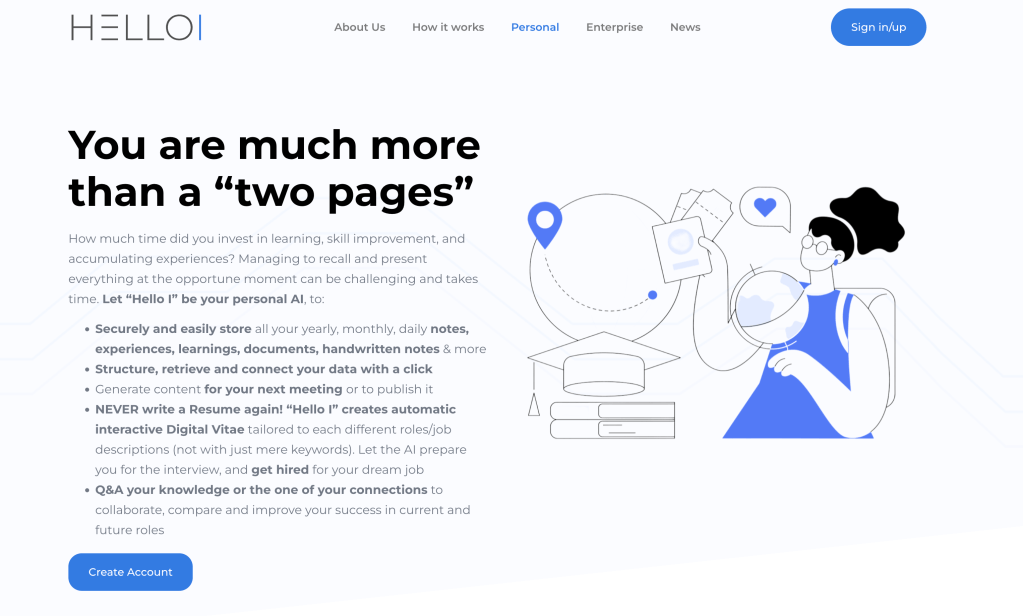
By scanning the job description for key skills, qualifications, requirements, company sector, culture, teams, Helloi.ai identifies the most relevant experiences from your work history, experience, work and life knowledge and strategically highlights them in your resume. This ensures that your application resonates with recruiters and effectively communicates your fit for the position.
Moreover, Helloi.ai doesn’t stop at simply selecting relevant experiences—it also optimizes the language and formatting of your resume to align with industry best practices and applicant tracking systems (ATS). This increases the likelihood of your resume passing through ATS screenings and landing in the hands of hiring managers.
In essence, by embracing the highlights-over-history approach and harnessing the capabilities of platforms like Helloi.ai, you can craft a resume that not only captures recruiters’ attention but also compels them to take notice of your unique value proposition. So, rather than drowning in the depths of your work history, let your highlights shine as beacons of your potential and prowess.
Understanding Early Career Contributions
While your most recent experience is generally the most relevant, early career jobs can sometimes be foundational to your growth in the industry. If an early role was significant in shaping your professional development or is highly relevant to the position you’re seeking, it may warrant a mention. However, in most cases, you can briefly touch upon these experiences or even summarize them in a single line without going into much detail.
Education, Certifications, and Professional Development
Your educational background and certifications often have their own section on a resume. If you have been in the workforce for a significant amount of time, it’s usually not necessary to include details about your education such as coursework or academic achievements, unless they are specifically relevant to the job. Focus instead on professional development activities, such as recent certifications or continuing education, which are more indicative of your current expertise.
Final Tips for Creating Your Resume
Remember that your resume is a marketing tool—its primary purpose is to showcase your skills and experiences that make you the right fit for the job you want. That often means tailoring your resume for each application, highlighting the most relevant experiences and trimming down less relevant information. Use clear, concise language and bullet points to illustrate your accomplishments, and always be prepared to discuss any aspect of your work history in more detail during an interview.
In conclusion, while resume length can vary depending on a range of factors, including relevancy to the job, level of position, and industry norms, it is important to concisely convey your professional narrative. By concentrating on the last 10–15 years of your career, emphasizing highlights over a comprehensive list, and being mindful of including pertinent early experiences, you can create a dynamic and impactful resume that stands out to employers.