Understanding the Career Test
Choosing the right career path can often seem daunting, but it doesn’t have to be an aimless journey. Career tests are tools designed to help individuals gain insights into their strengths, interests, and personality traits, thereby providing a compass for navigating the complex world of careers. Though not foolproof, these assessments can be valuable resources in clarifying one’s career objectives and outlining steps to achieve them.
Varieties of Career Assessments
Career tests come in a variety of forms, each with a unique focus and outcome. Some common types include:
Personality Assessments
Personality assessments are tools designed to evaluate and categorize an individual’s character traits, behaviors, and preferences. They play a crucial role in helping individuals understand how their unique personality fits into various career environments and job roles. Perhaps the most well-known personality test, the Myers-Briggs Type Indicator (MBTI), categorizes individuals into 16 personality types, which can offer insight into one’s suitable work environment and preferred job roles.
The MBTI categorizes individuals into 16 distinct personality types based on four dichotomies:
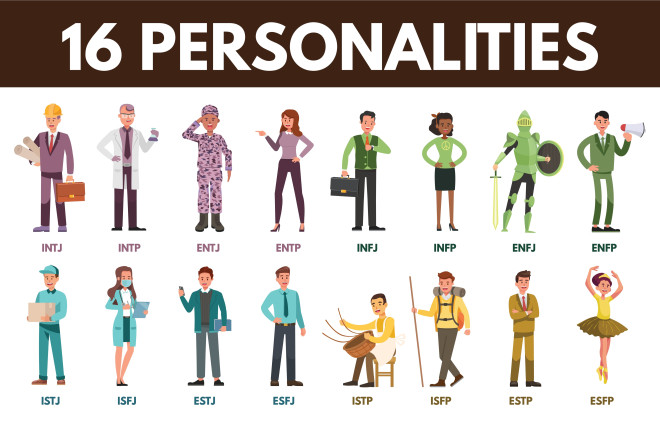
- Extraversion (E) vs. Introversion (I): This dimension indicates whether a person is energized by social interactions and external activities (Extraversion) or by solitary activities and introspection (Introversion).
- Sensing (S) vs. Intuition (N): This aspect assesses whether a person prefers to process information through concrete, factual data (Sensing) or through patterns and abstract possibilities (Intuition).
- Thinking (T) vs. Feeling (F): This dichotomy reflects whether an individual makes decisions based on logical analysis (Thinking) or on personal values and the impact on others (Feeling).
- Judging (J) vs. Perceiving (P): This dimension measures whether a person prefers a structured, planned approach to life (Judging) or a more flexible, spontaneous approach (Perceiving).
According to the Myers & Briggs Foundation, millions of people worldwide have taken the MBTI to gain a better understanding of their personal and professional preferences. The widespread use of the MBTI underscores its significance in career development, team building, and personal growth. Many organizations incorporate MBTI assessments into their hiring processes and employee development programs to foster a more harmonious and productive work environment.
Interest Inventories
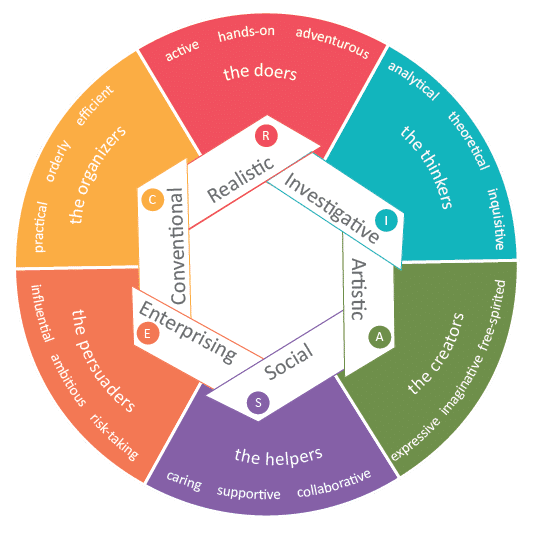
Interest inventories are designed to evaluate an individual’s preferences and inclinations across a wide range of activities and subjects, providing valuable insights into potential career fields that align with these interests. One of the most prominent and enduring tools in this category is the Strong Interest Inventory.
The Strong Interest Inventory consists of questions that measure your interests across a broad spectrum of activities. The results are then compared to the interests of individuals in various professions. The assessment provides a comprehensive profile that includes:
- General Occupational Themes (GOTs): Broad areas of interest such as Artistic, Social, Enterprising, and Investigative.
- Basic Interest Scales (BISs): More specific interest areas within each theme, like Healthcare Services, Performing Arts, or Finance.
- Occupational Scales: Comparisons of your interests with those of people in specific occupations.
- Personal Style Scales: Insights into your preferences for work style, learning environment, leadership style, risk-taking, and team orientation.
Aptitude Tests
Aptitude tests are designed to measure specific skills and abilities, providing valuable insights into careers where these talents can be effectively utilized. These assessments evaluate a range of competencies, such as numerical reasoning, verbal aptitude, and spatial awareness, helping individuals identify career paths that align with their strengths.
One prominent example of an aptitude test is the Armed Services Vocational Aptitude Battery (ASVAB). This comprehensive assessment is used by the U.S. military to determine an individual’s qualifications for enlistment and to identify suitable career fields within the armed forces. The ASVAB evaluates a wide array of skills through subtests that cover topics such as:
- General Science: Knowledge of physical and biological sciences.
- Arithmetic Reasoning: Ability to solve arithmetic word problems.
- Word Knowledge: Understanding of word meanings.
- Paragraph Comprehension: Ability to obtain information from written material.
- Mathematics Knowledge: Knowledge of mathematical concepts and applications.
- Electronics Information: Understanding of electrical concepts and devices.
- Auto and Shop Information: Knowledge of automotive maintenance and repair, and wood and metal shop practices.
- Mechanical Comprehension: Understanding of mechanical and physical principles.
- Assembling Objects: Spatial orientation and ability to determine how an object will look when parts are put together.
In addition to the ASVAB, there are several other widely recognized aptitude tests that help individuals identify their strengths and align them with appropriate career opportunities:
- Raven’s Progressive Matrices: A nonverbal assessment of abstract reasoning and problem-solving ability, often used in various fields to evaluate cognitive abilities.
- Graduate Management Admission Test (GMAT): Used primarily for admission to graduate business programs, the GMAT assesses analytical writing, quantitative reasoning, and verbal skills.
- Graduate Record Examinations (GRE): A standardized test for admission to various graduate schools, the GRE measures verbal reasoning, quantitative reasoning, and analytical writing skills.
- SAT and ACT: Standardized tests used for college admissions in the United States, assessing mathematical, verbal, and analytical abilities.
Skills Assessments
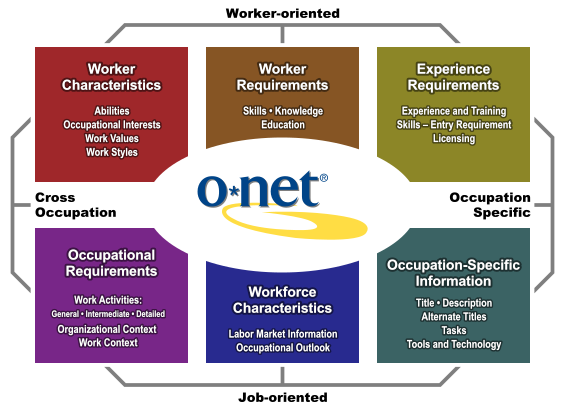
Skills assessments help individuals understand their existing skillset and identify areas for improvement or potential career paths that leverage their strengths. Tools like the O*NET Career Exploration Tools offer skills assessments that align with the U.S. Department of Labor’s occupational database, providing a comprehensive overview of required skills for various careers.
Key features of the ONET Career Exploration Tools include:
- Skills Search: Allows users to identify occupations that match their skill profiles.
- Occupation Reports: Provide detailed information about the skills, knowledge, and abilities required for specific jobs.
- Interest Profiler: Helps users discover careers that align with their interests and existing skills.
The Benefits of Taking Career Tests
Career tests offer numerous advantages for anyone pondering their future profession:
Identifying Strengths and Weaknesses
Career tests help individuals focus their career search more effectively by highlighting areas of strength and areas needing development. A 2018 study by the National Association of Colleges and Employers (NACE) found that self-assessment tools significantly enhance the career readiness of college students.
Saving Time and Energy
These assessments can save time and energy by providing clearer direction early in the career planning process. Instead of exploring countless career options, individuals can narrow their focus to fields that align with their test results.
Enhancing Self-Awareness
Career assessments can enhance self-awareness, which is a critical aspect of personal development. According to a 2019 Gallup study, self-aware individuals are more likely to be successful in their careers, as they can better navigate their strengths and weaknesses.
Revealing New Job Skills
They can reveal occupations that one may have never considered but are well-suited for. For instance, the Holland Code (RIASEC) model helps individuals discover careers that match their personality types and interests, often uncovering surprising career options.
Comprehensive View
Taking a variety of tests can provide a comprehensive view, as different tests highlight different aspects of a person’s profile. Career counseling professionals often use these tests as a basis for discussions, aiding in creating an action plan.
Trends in Career Assessments
The field of career assessments is evolving, with new trends and technologies shaping how individuals explore their career potential:
AI and Machine Learning
Artificial intelligence (AI) and machine learning are transforming career assessments. Tools like Pymetrics use neuroscience-based games and AI to match individuals with careers based on their cognitive and emotional traits.
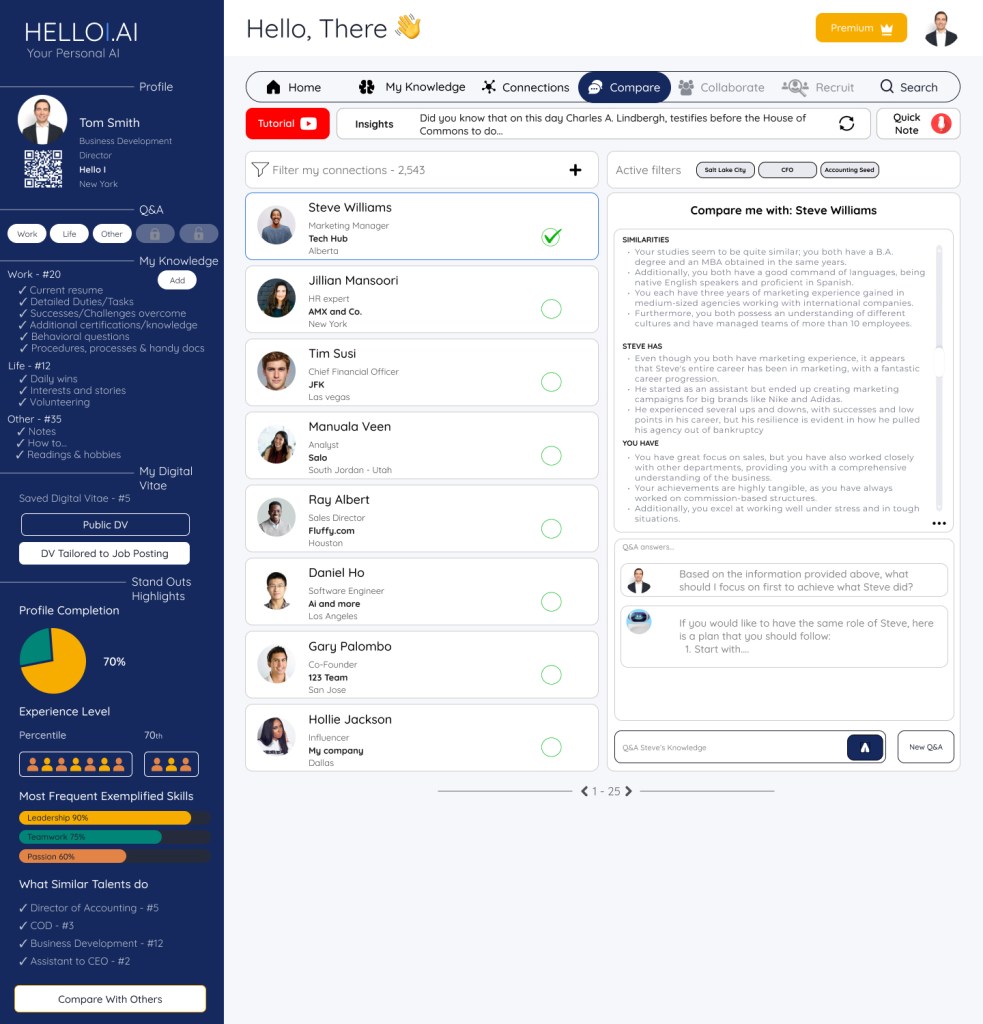
Hello I is the most advanced AI tool designed to provide you with a comprehensive understanding of yourself, encompassing your knowledge, career, motivations, and aspirations. By comparing your profile with thousands of other users, “Hello I” offers insights into:
- Showcasing Your Full Value: Effectively present your qualifications and strengths to hiring managers, enhancing your job prospects.
- The Best Career Choices for You: Discover which career paths align with your strengths and interests.
- Identifying Current Gaps: Understand the areas where you need improvement to achieve your career goals.
- Guidance on How to Get There: Learn what skills to develop, where to acquire them, and the steps to take for career advancement.
Virtual Reality (VR)
Virtual reality is being integrated into career exploration. VR platforms like CareerLabs VR provide immersive experiences that allow individuals to virtually explore different job environments and tasks.
Data-Driven Insights
Data analytics is enhancing the accuracy and relevance of career tests. Platforms like CareerFitter utilize extensive data to offer personalized career recommendations based on comprehensive assessments.
Holistic Approaches
There is a growing trend towards holistic career assessments that consider not only skills and interests but also values, lifestyle preferences, and long-term goals. The Harrington-O’Shea Career Decision-Making System (CDM) is an example of a tool that takes a multi-faceted approach to career planning.
Mobile and Online Accessibility
With the rise of mobile technology, career assessments are becoming more accessible. Apps like Good&Co provide on-the-go career assessments that integrate with professional networks like “Hello I”.
Conclusion
The value of career tests lies in their ability to serve as mirrors, reflecting facets of your personality, likes, dislikes, and skills that you might not have fully recognized or considered. While not a definitive answer, they are stepping stones that provide direction, suggesting paths that are worth exploring. With thoughtful analysis and professional guidance, you can use career tests as a foundation for a successful and satisfying career journey.
In a world where career paths are increasingly diverse and non-linear, career assessments offer a structured way to navigate the complexity. By leveraging these tools, you can gain deeper insights into your potential, align your strengths with suitable career options, and ultimately find a path that is both fulfilling and aligned with your personal and professional goals.