First: understand, before thinking of conflict resolution
Effectively navigating conflict resolution requires a thorough understanding of its complexities. The initial step involves meticulously dissecting the conflict, akin to peeling back layers of an onion, to reveal its core essence.
Five “Why’s” for Conflict Resolution
Employing methods such as the “Five Whys” technique can be instrumental in this process. The five whys method is a technique for analyzing problems within an organization. 5 Whys works on the premise that “Every problem has a cause behind it, but a superficial analysis will only depict symptoms. A persistent inquiry is required to find the real cause (the root cause) behind the issue so that lasting solutions can be taken and the problem doesn’t resurface.” Start by identifying the surface-level issues and then iteratively ask “why” until you uncover the underlying causes. Let’s see how it would work with a very tangible problem so to better understand the mechanics:

Listening is Key in Conflict Resolution
Simultaneously, engage in empathetic listening, actively seeking to comprehend the divergent perspectives, needs, and aspirations of each party involved. Questions like “What are your primary concerns in this situation?” or “What outcomes are you hoping to achieve?” can facilitate this understanding. Encourage open dialogue by asking follow-up questions that delve deeper into the emotions and underlying motivations driving the conflict.
Throughout this process, maintain a neutral stance, refraining from judgment or bias, and foster an environment of psychological safety where all parties feel empowered to express themselves freely. Utilize reflective listening techniques to confirm understanding and validate the emotions of each participant while using the 5 Whys could be a great add on. Here a short representation on how to utilize reflective listening:

Remember, the goal isn’t merely to resolve the conflict but to transform it into an opportunity for growth and collaboration. By investing time and effort in dissecting the conflict thoroughly, and listen carefully, you can unearth its root causes and pave the way for sustainable solutions that address underlying issues rather than surface-level symptoms.
Open Communication Builds Trust
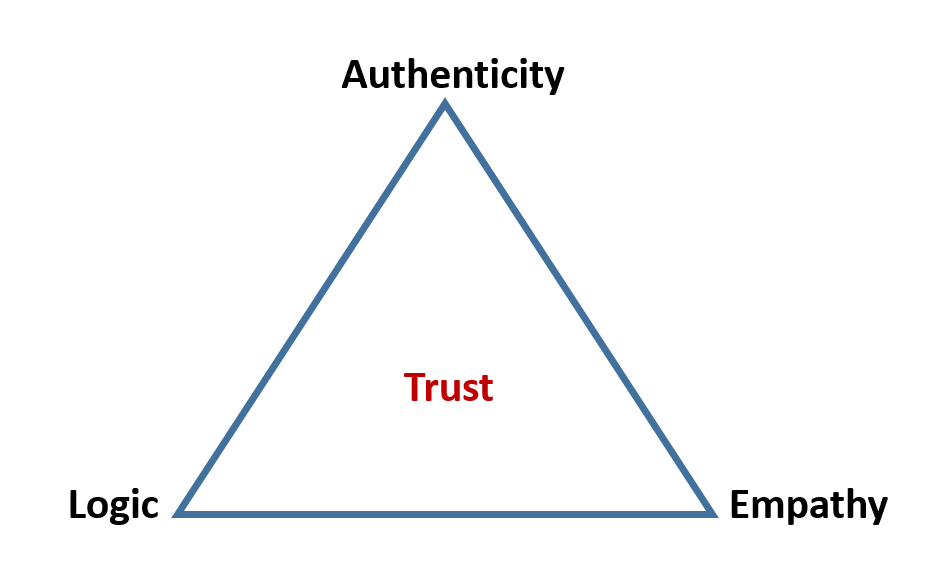
Open communication is the cornerstone of effective conflict resolution, fostering an atmosphere of transparency and trust that can defuse tensions and pave the way for resolution. Here we introduce one thing we did not introduced before… Trust. Trust is the “best friend” you can have while trying to resolve a conflict in a team or between you and another employee. Why that? Because if you have trust, it is more likely that the team, or the other person, are going to listen to you carefully and will follow your method of resolving the issue. But how to build trust? One of our favorite videos on trust is a speech from Frances Frei at TED called “how to build and rebuild trust”. Here is her vision of the three pillars of trust:
But what to do to build that trust or what if you feel that you lost that trust?
According to Frei, trust relies on three key elements: authenticity, logic, and empathy. She asserts that when these components are functioning harmoniously, trust flourishes; however, any instability in one of these areas can jeopardize trust. Frei proposes that rebuilding trust entails recognizing where one may falter in authenticity, empathy, or logic, and then implementing strategies to rectify these shortcomings.
Empathy often suffers due to distractions and self-absorption, making it challenging to create meaningful connections. Frei suggests identifying situations where distractions are likely to occur and recognizing when empathy might be withheld. By actively listening and engaging with others, one can address this empathy “wobble.”
Logic can falter due to weak reasoning or ineffective communication. Frei recommends structuring communication to begin with a concise statement of the main point, followed by supporting details. This approach not only strengthens the argument but also ensures that the main idea is conveyed even if interruptions occur.
Authenticity poses the greatest challenge, especially for individuals who deviate from the norm. Frei advises individuals to embrace their true selves, emphasizing that authenticity is crucial for building trust. Leaders, in particular, should cultivate environments where authenticity is valued and individuals feel safe to express themselves without fear of judgment.
When trust is gained, you will have created the perfect space for open communication. This means that together with trust you brought also respect, confidentiality, and openness. This will encourage individuals to speak up without fear of judgment or reprisal, emphasizing the importance of mutual understanding and collaboration.
Finding Common Ground for Conflict Resolution
Finding common ground is pivotal in navigating through conflicts effectively. Once you’ve thoroughly analyzed the issue and established trust, the next step is crucial. While conflicts often highlight differences, it’s essential to shift the focus towards identifying shared interests or objectives. This process can serve as a robust foundation for crafting a resolution. Remember: you are NOT SOLVING THE PROBLEM, YET.
Research such as “Finding Common Ground: Enhancing Interaction and Interactivity in Conflict Resolution” by Carrie Heeter and Matthew M. Martin highlights the importance of finding common ground in mediated communication settings. Their study demonstrates how acknowledging shared goals enhances interaction and interactivity, ultimately leading to more successful conflict resolution outcomes.
By acknowledging commonalities, whether they’re mutual concerns or desired outcomes, all parties involved can transition from adversaries to collaborators. This shift in perspective transforms the dynamic from a competitive struggle to a cooperative endeavor. Such a transformation is integral in fostering a productive atmosphere conducive to finding mutually beneficial solutions.
Moreover, uncovering common ground not only facilitates agreement on specific points but also fosters a sense of unity and shared purpose. This shared sense of direction can significantly enhance communication and collaboration, ultimately leading to more effective conflict resolution.
Problem Solve Together for Improved Conflict Resolution
Problem-solving together is a collaborative approach that empowers all parties involved to contribute to the resolution process. By engaging everyone in problem-solving, individuals feel a sense of ownership over the outcome, which increases their commitment to finding a satisfactory solution. This process typically begins with brainstorming sessions where all stakeholders are encouraged to generate potential solutions without judgment or criticism.
During these sessions, it’s crucial to foster a creative environment where ideas can flow freely, even unconventional ones, as they may spark innovative solutions. Once a variety of options have been proposed, the group can then evaluate each solution’s feasibility, considering factors such as resources, time constraints, and potential risks.
Negotiation plays a central role in problem-solving together, as parties work collaboratively to reach a consensus on the best course of action. This requires the willingness to compromise, flexibility in exploring different perspectives, and the ability to seek common ground.
Moreover, effective problem-solving involves envisioning a successful outcome that meets the needs and interests of all parties involved. This requires empathy and active listening to understand the underlying concerns and motivations driving each stakeholder. By prioritizing mutual respect and cooperation, individuals can work together to develop creative solutions that address the root causes of the conflict and lead to a sustainable resolution.
Agree on a Way Forward
Finally, any agreement reached must be clear, concrete, and actionable. This involves establishing:
- Who will do what,
- By when, and
- How progress will be monitored.
It may be useful to write the agreement down so all parties have a shared understanding of the commitments made. This also prevents future misunderstandings by giving everyone a document to refer back to. Ensure that the resolution is fair for all involved and remember, the aim is not just to end the conflict but also to maintain or strengthen relationships and prevent the re-emergence of the issue.
Summary
Conflict resolution is a complex process requiring empathy, communication, collaboration, and problem-solving skills. By understanding the conflict, fostering open communication, finding common ground, solving problems together, and agreeing on a way forward, individuals and organizations can navigate conflicts effectively and build stronger, more resilient relationships.