


Understanding the Skill Spectrum: Hard Skills vs. Soft Skills
What are Hard Skills?
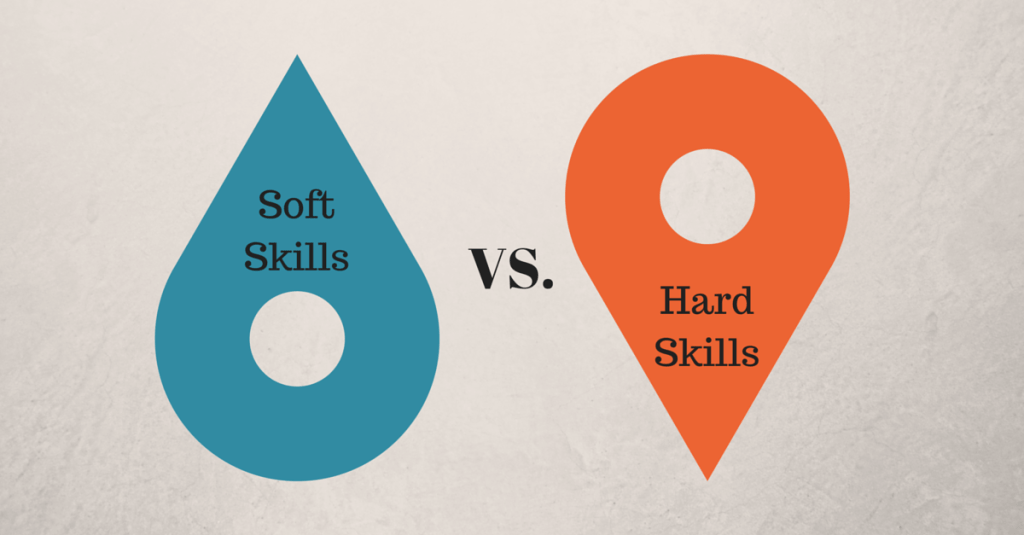
Hard skills refer to the technical abilities and knowledge that are often gained through formal education, training, or practical experience. These skills are essential for performing specific job functions and are typically measurable and testable. Examples include:
- Proficiency in foreign languages
- Programming skills
- Machine operation
- Financial analysis
What are Soft Skills?
Soft skills, also known as interpersonal or emotional intelligence (EQ) skills, are less tangible and reflect an individual’s ability to interact with others effectively. Key soft skills encompass:
- Communication
- Leadership
- Problem-solving
- Adaptability
Why Balancing Hard and Soft Skills is Integral to Career Progression
In today’s evolving job market, the balance between hard and soft skills is crucial for career success. Employers are not only looking for candidates with the right qualifications and expertise but also for those who can collaborate, innovate, and adapt to a fast-paced work environment.
The Synergy of Skill Sets
A harmonious blend of hard and soft skills empowers professionals to excel in their roles.
Hard & Soft Skill Example for Software Developers
A software developer needs technical proficiency in coding and software development, but to ascend to a leadership position, soft skills such as team management, strategic planning, and emotional intelligence become vital.
Hard & Soft Skill Example for Project Managers
A project manager may excel at technical tasks like scheduling and budgeting, yet without strong communication or conflict-resolution skills, they may struggle to effectively lead their team and foster a collaborative work environment.
A study by the Stanford Research Institute International and the Carnegie Mellon Foundation found that 75% of long-term job success depends on people skills, while only 25% on technical knowledge. This synergy ensures that professionals are not only competent in their technical roles but also capable of guiding and inspiring their teams.
Market Demand
In today’s competitive job market, employers seek candidates who are flexible and multi-dimensional. They value individuals who possess a robust foundation of hard skills, complemented by soft skills that enable them to approach complex, multi-faceted problems with a holistic perspective.
According to a LinkedIn survey, 92% of hiring managers consider soft skills to be as important or more important than technical skills, and 89% believe that bad hires typically lack the necessary soft skills. This blend of skills allows professionals to adapt to various roles and challenges, making them more valuable to their organizations.
Future-Proofing Your Career for Professional Growth
As automation and artificial intelligence increasingly handle routine tasks, the human workforce will need to rely more on soft skills that machines cannot replicate, such as critical thinking, empathy, and creativity. A report by the World Economic Forum emphasizes that by 2025, 85 million jobs may be displaced by a shift in the division of labor between humans and machines, but 97 million new roles may emerge that are more adapted to this new dynamic between humans, machines, and algorithms.
Continuously developing these skills alongside hard skills can make a professional indispensable, ensuring their relevance and adaptability in an evolving job market. For instance, while AI can analyze data, the ability to interpret and leverage insights in innovative ways requires human creativity and strategic thinking. By cultivating a balanced skill set, professionals can safeguard their career trajectories and remain competitive in a future dominated by technological advancements.
How to Identify and Develop Your Hard Skills and Soft Skills Manually
Self-Assessment and Feedback
- Self-Assessment: Start by listing your current hard and soft skills. Hard skills are specific, teachable abilities like coding, data analysis, or project management. Soft skills are interpersonal traits like communication, teamwork, and problem-solving.
- Career Assessments: Utilize tools like the Myers-Briggs Type Indicator (MBTI), StrengthsFinder, or industry-specific skills assessments to gain insights into your strengths and areas for improvement.
- Feedback from Peers and Mentors: Seek constructive feedback from colleagues, supervisors, and mentors. They can provide an external perspective on your skills and suggest areas for development.
- Reflect on Work Experiences: Analyze past projects and work experiences to identify which skills you utilized effectively and where you encountered challenges. This reflection can highlight your strengths and areas needing improvement.
Identifying Skill Gaps
- Research Your Desired Role: Look at job descriptions, industry reports, and LinkedIn profiles of professionals in your target role. Identify the key hard and soft skills required.
- Compare Current Skills to Desired Skills: Create a comparison chart to see where your current skills align with those needed for your desired role and where there are gaps.
- Set Development Goals: Based on the gaps identified, set specific, measurable, achievable, relevant, and time-bound (SMART) goals to develop these skills.
Skills development
- Find the right courses: Now that you have your skill gaps, it’s time to find courses or coaches that can help you. You will need to scout the internet (and a lot of reviews) to find what you are looking for. Do not take shortcuts here cause it’s vital to choose the right course or the right coach! Take your time and analyze all pros and cons.
- Courses and Certifications: Enroll in online courses, attend workshops, or pursue certifications in areas like data analysis, project management, or other relevant hard skills.
How to Identify and Develop Your Hard Skills and Soft Skills with AI
Helloi.ai can do all the above for you in seconds. Let’s see how:
Assessment and Feedback
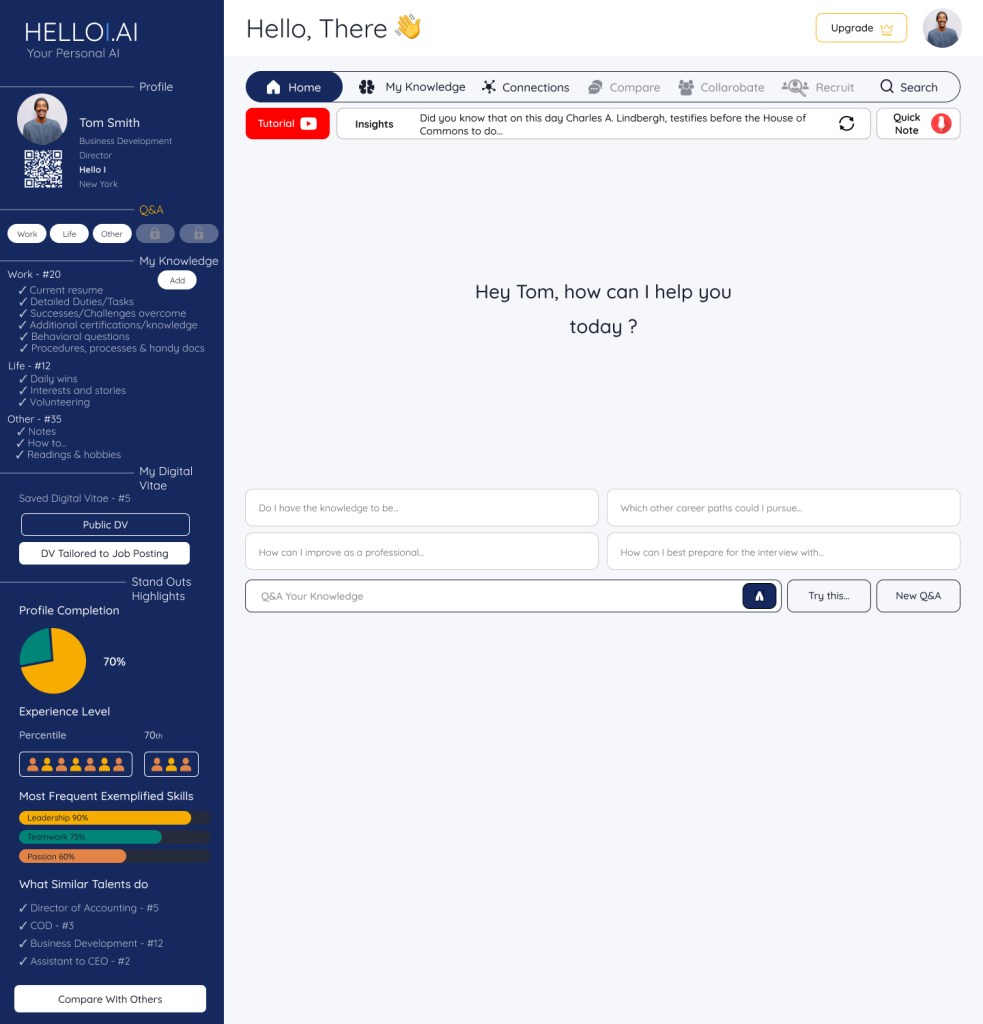
- Personal AI: HelloI.ai allows you to upload documents, notes, and experiences, creating a dynamic knowledge hub. This helps you keep track of your hard and soft skills in one place.
- Feedback and Insights: The platform can analyze your stored data to provide insights into your strengths and areas for improvement, based on industry benchmarks and personal goals.
Identifying Skill Gaps
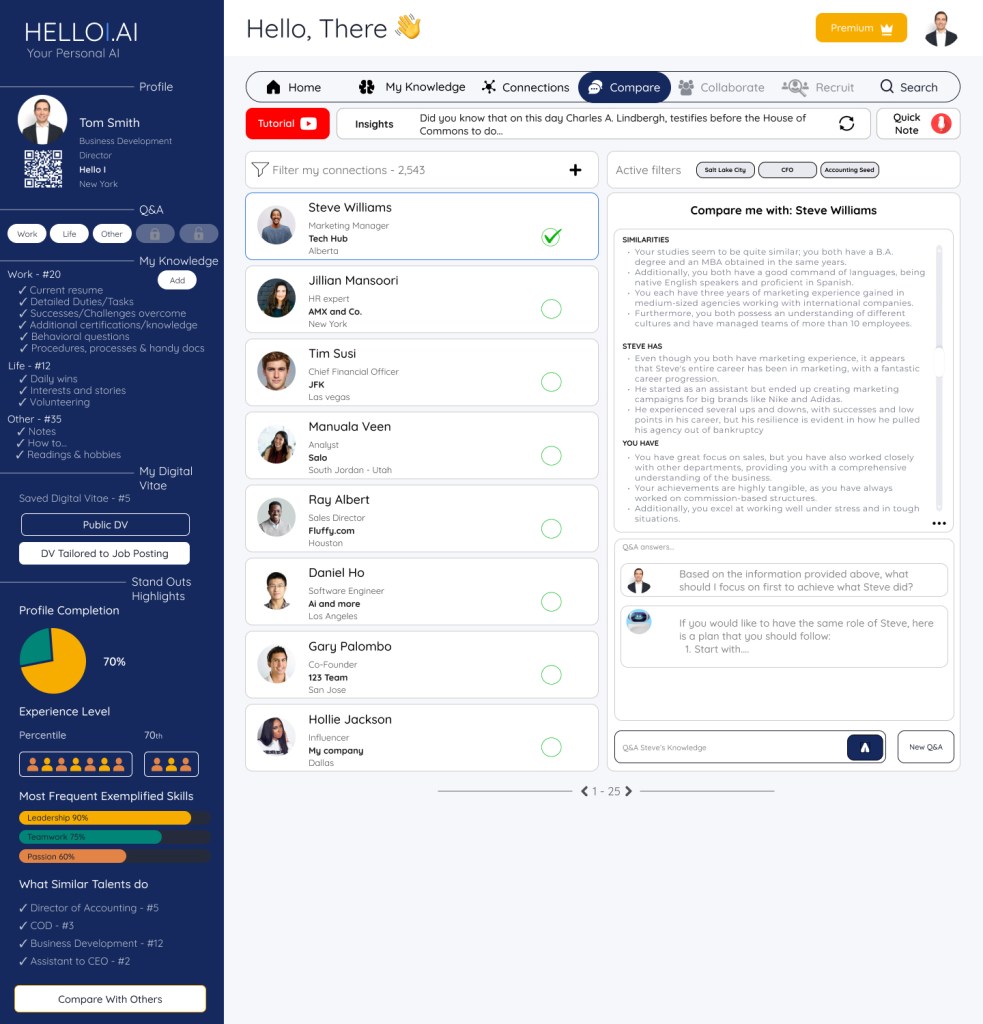
- Comparison with Peers: HelloI.ai enables you to compare your skills and experiences with those of your peers, identifying gaps and areas needing development. The analysis will give you exactly what you need to learn or improve on. No more guessing, take control of your career.
- Tailored Recommendations: The AI can suggest specific skills to develop based on your desired career path and current skill set.
Skills development
- Resource Suggestions: The platform provides recommendations for courses, certifications, and workshops to enhance your hard skills and soft skills based on data and comparisons with your peers,
- Soft Skills Development: Helloi.ai provides you the possibility of asking any soft skills comparison with anyone else on the platform. It can automatically give you also how you compare with others.
Showcase Soft Skills Alongside Your Hard Skills
Communication as a Catalyst
Even in highly technical roles, effective communication is essential. Strive to clearly articulate complex technical concepts to non-technical stakeholders and collaborate seamlessly with colleagues across various departments. This ensures that everyone understands the project’s goals and progress, fostering a more cohesive working environment.
Leadership and Teamwork
While technical competence is crucial, the ability to inspire, motivate, and work well with others will distinguish you as a leader and team player. Demonstrating these qualities can lead to increased trust and responsibility, enhancing your professional reputation.
Problem-Solving and Adaptability
Creative problem-solving and adaptability are invaluable in any role. Embrace challenges as opportunities to learn and grow, and be willing to adjust your approach as needed. This flexibility not only improves your performance but also prepares you to handle future uncertainties and complexities.
Empathy and Emotional Intelligence
Understanding and empathizing with colleagues’ perspectives can significantly improve team dynamics. Emotional intelligence enables you to navigate interpersonal relationships judiciously and empathetically, which is essential for effective collaboration and conflict resolution.
Networking and Relationship Building
Building strong professional relationships can open doors to new opportunities and collaborations. Actively participate in industry events, online forums, and company gatherings to expand your network. These connections can provide support, advice, and opportunities that enhance your career trajectory.
Strategic Thinking
Integrate strategic thinking into your daily tasks. Understand how your technical contributions align with the organization’s broader goals. This big-picture perspective enables you to make more informed decisions and propose innovative solutions that drive the company forward.
Final Thoughts: Continuously Striking the Right Balance
The pursuit of a well-rounded skill set is ongoing and dynamic. As industries evolve and new technologies emerge, the demand for both hard and soft skills will shift. Stay proactive in your personal and professional development, remain receptive to feedback, and be willing to step out of your comfort zone. By mastering the balance between hard and off skills, you’ll not only enhance your employability but also position yourself for sustainable career success in an ever-changing world.